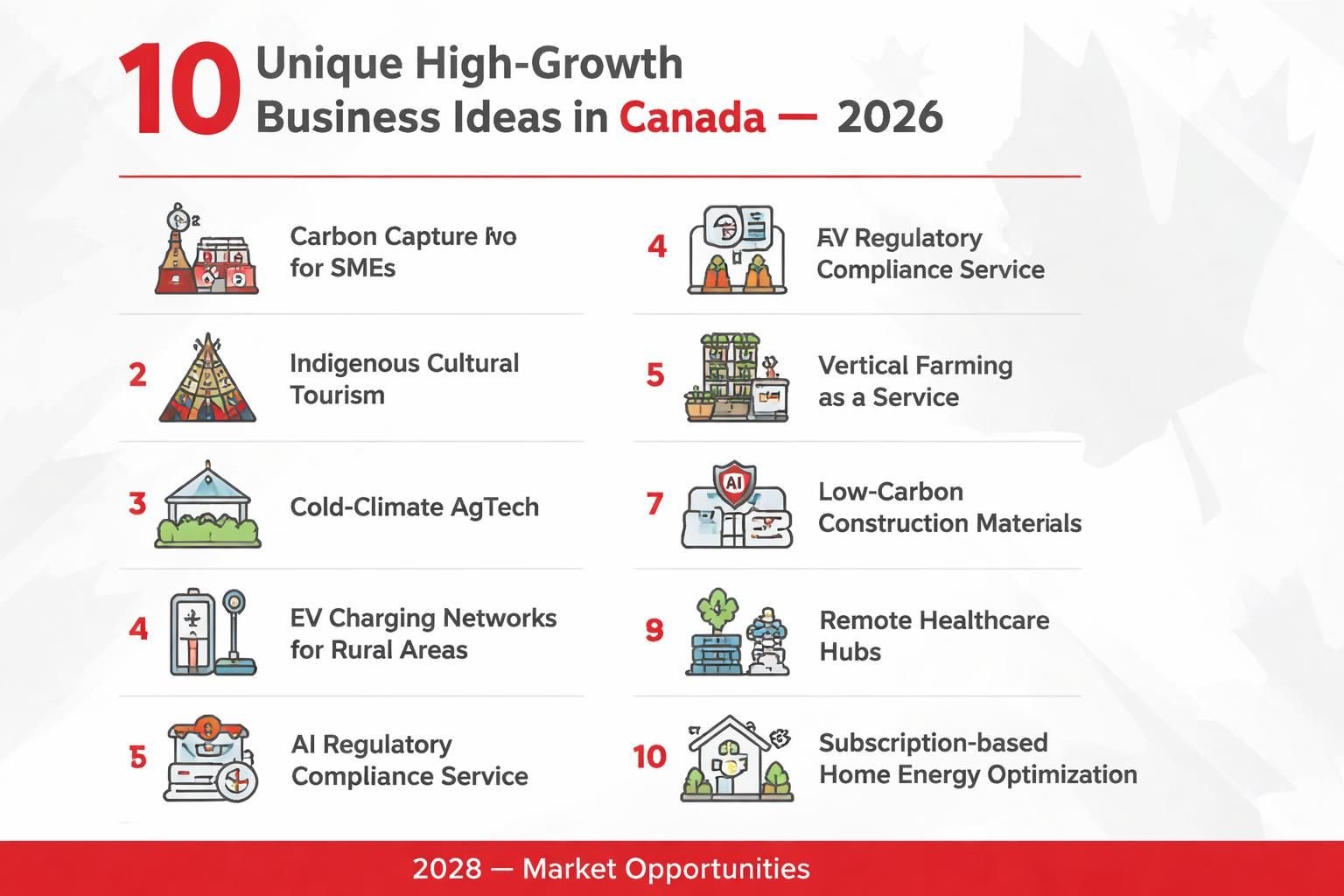
The best unique business ideas in Canada for 2026 center on sustainability, technological integration, and the evolving needs of an aging population. Key sectors poised for growth include green energy retrofitting, AI-driven personalized health coaching, and circular economy consulting. These niches leverage Canada’s federal incentives for net-zero goals and the increasing digital transformation of its workforce.
The Evolving Canadian Market Landscape in 2026
By 2026, the Canadian economic landscape will be defined by stricter environmental regulations, a deeply ingrained hybrid work culture, and a significant demographic shift toward a more senior population. Entrepreneurs who align their business models with these macro trends will find more than just profitability; they will find longevity.
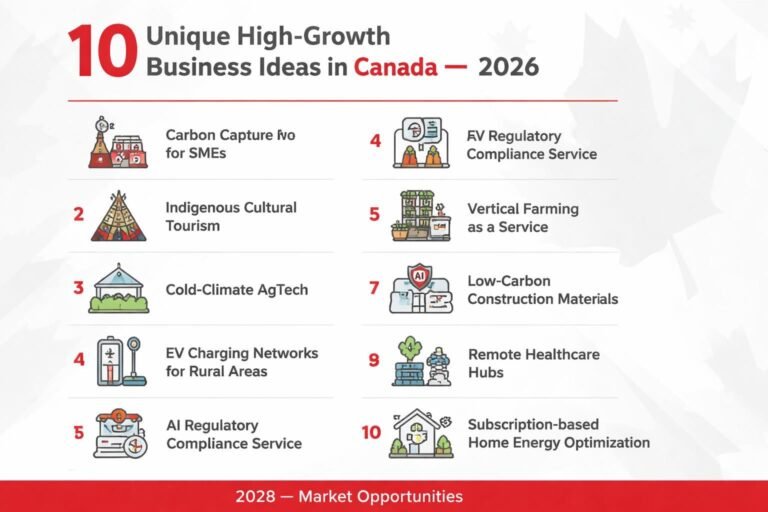
1. Sustainable Residential Retrofitting Services
With the Canadian government’s commitment to achieving net-zero emissions, homeowners are under pressure to improve energy efficiency. A business focused on specialized retrofitting—installing heat pumps, high-efficiency insulation, and smart energy grids—will be in high demand. This venture benefits from federal grants and a growing consumer desire to lower utility costs.
2. AI-Powered Personalized Health Coaching
As the healthcare system faces strain, Canadians are turning to preventative self-care. An AI-driven platform that integrates wearable data with nutritional and physical therapy advice provides a scalable solution. By 2026, personalized AI will be sophisticated enough to provide hyper-local advice based on Canadian environmental factors and lifestyle trends.
3. Remote Work Infrastructure as a Service (RIaaS)
Remote work is no longer a temporary fix; it is a permanent fixture in the Canadian economy. Businesses in 2026 will need help managing decentralized physical assets. A service that provides, maintains, and secures home office setups for corporations—ensuring ergonomic standards and cybersecurity—is a highly viable niche.
4. Urban Vertical Farming for Food Security
Supply chain disruptions have highlighted the need for localized food production. Small-scale, tech-enabled vertical farms in urban centers like Toronto, Vancouver, and Montreal can provide fresh, year-round produce. This business model addresses food security concerns and appeals to the eco-conscious Canadian consumer.
5. Circular Economy Consulting for SMEs
Small and medium enterprises (SMEs) often lack the resources to transition to zero-waste models. A consultancy that helps these businesses implement circularity—turning waste into resources—will be essential as ESG (Environmental, Social, and Governance) reporting becomes standard for all business sizes.
6. Mobile Tech Support for the Aging Population
Canada has a rapidly growing senior demographic that wishes to age in place. A business providing specialized, in-home tech support to help seniors navigate telehealth, smart home monitoring, and social connectivity tools will fill a massive gap in the service market.
7. Carbon Credit Brokerage for Small Businesses
While large corporations have been trading carbon credits for years, 2026 will see smaller businesses looking to participate in the carbon market. A brokerage that simplifies the process for SMEs to earn and sell credits based on their green initiatives provides a unique financial service niche.
8. AI Ethics and Compliance Auditing
With the full implementation of Canada’s Artificial Intelligence and Data Act (AIDA), companies will need third-party audits to ensure their algorithms are unbiased and compliant. This requires a mix of legal knowledge and technical AI expertise, making it a high-barrier-to-entry, high-reward field.
9. Indigenous-Led Cultural Tourism Platforms
There is a growing global and domestic interest in authentic Indigenous experiences. A digital platform that connects travelers with Indigenous-led tours, workshops, and stays—ensuring all profits and control remain with the communities—is both a socially responsible and commercially viable idea.
10. Specialized Electric Vehicle (EV) Maintenance and Charging Solutions
As Canada moves toward its 2035 ban on new internal combustion engine vehicles, the secondary market for EVs will explode by 2026. Unique businesses that focus on specialized EV battery diagnostics, mobile charging services, or high-end detailing for electric fleets will find a rapidly expanding customer base.
Why Start a Business in Canada in 2026?
Canada remains a top destination for entrepreneurs due to its stable banking system, diverse workforce, and government support for innovation. In 2026, the focus on “Green Tech” and “Inclusive Growth” provides specific pathways for newcomers and local entrepreneurs alike to secure funding and scale.
Key Success Factors
- Digital First Approach: Every unique idea must have a robust digital presence and data strategy.
- Sustainability Focus: Consumers in 2026 will prioritize brands that demonstrate environmental stewardship.
- Regulatory Alignment: Stay ahead of federal mandates regarding AI ethics and carbon footprints.
FAQ: Starting a Business in Canada
What is the most profitable business to start in Canada in 2026?
Sustainable energy services and AI-driven compliance are projected to be among the most profitable due to high demand and regulatory requirements. However, profitability depends on execution and local market conditions.
Are there government grants for new businesses in 2026?
Yes, the Canadian government continues to offer various programs, particularly for businesses in clean tech, agriculture, and those owned by underrepresented groups. The Canada Digital Adoption Program (CDAP) is also a key resource.
How do I protect my business idea in Canada?
Protection involves a combination of trademarks, patents for unique inventions, and non-disclosure agreements (NDAs) when discussing your model with potential partners or investors.
Do I need to be a Canadian citizen to start a business?
No, but you must have the legal right to work in Canada. Programs like the Start-up Visa Program are designed specifically for immigrant entrepreneurs who want to establish a business in the country.
What are the biggest challenges for startups in 2026?
Labor shortages in specialized tech fields and the rising cost of commercial real estate are expected to be the primary challenges. Focusing on a remote-first or tech-automated model can help mitigate these costs.
Final Words
Starting a unique business in Canada in 2026 requires a blend of social consciousness and technological savvy. By focusing on solving real-world problems like climate change, health accessibility, and digital equity, entrepreneurs can build resilient companies that thrive in the modern Canadian economy.