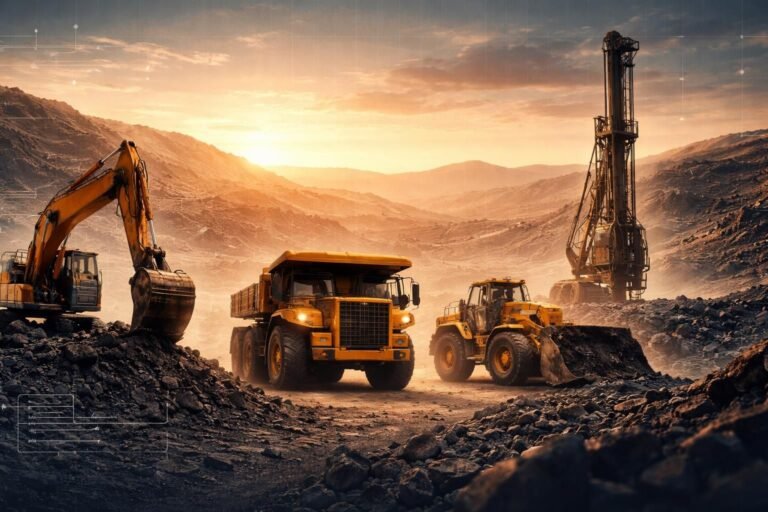
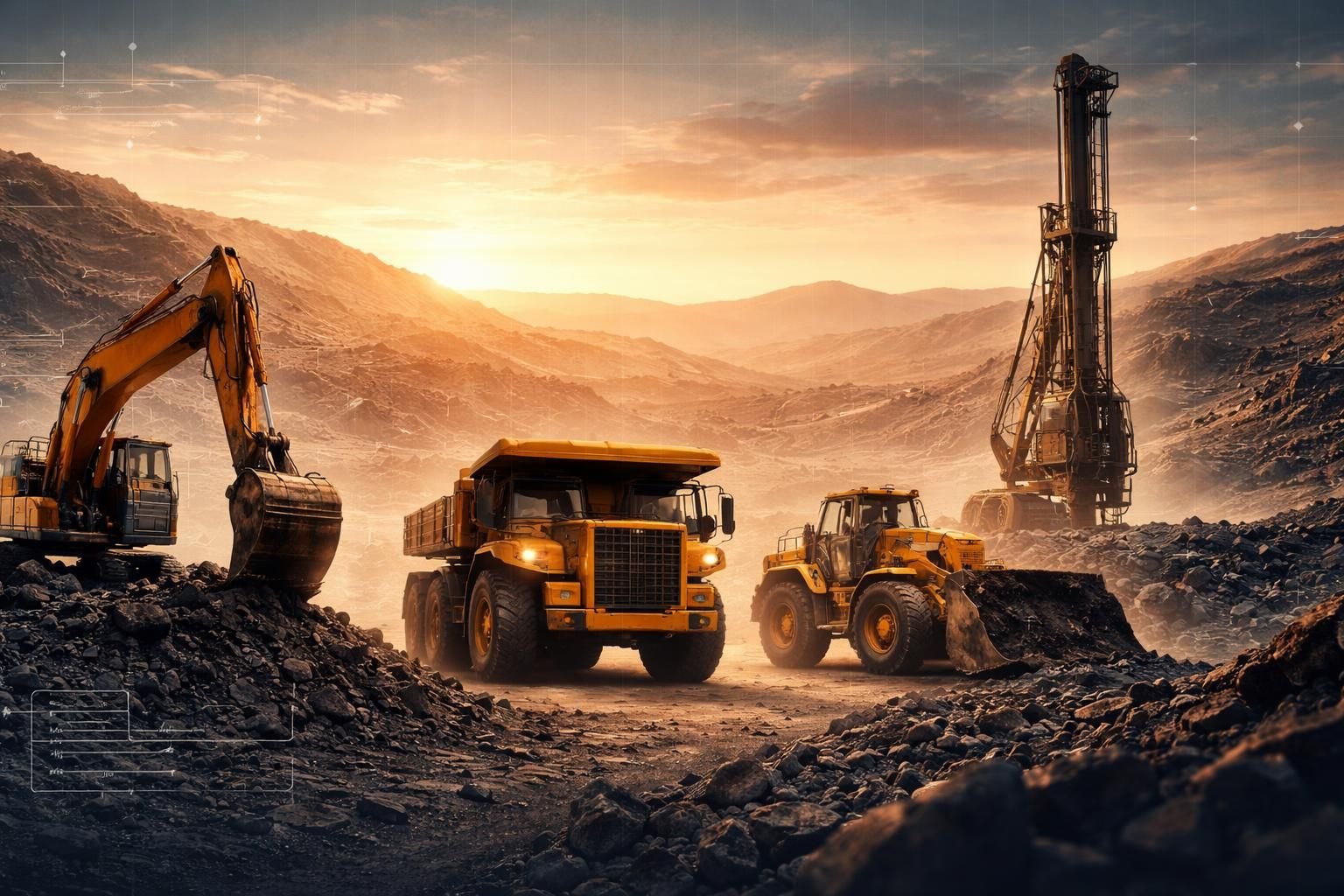
Mining machinery refers to the specialized heavy equipment designed to extract, move, and process minerals, metals, and coal from the Earth’s crust. The primary types of machinery used in the extraction sector include hydraulic excavators, haul trucks, drills, and crushers. These machines are engineered to handle the rigorous demands of both surface mining and underground operations, ensuring efficiency and safety in the production of global raw materials.
The Role of Heavy Equipment in Modern Mining
The extraction sector relies heavily on mechanical power to perform tasks that would be impossible manually. Modern mining machinery has evolved to be more autonomous, fuel-efficient, and capable of operating in extreme environments. Whether the goal is harvesting precious metals or industrial minerals, the choice of equipment determines the profitability and safety of the mine site.
Essential Surface Mining Equipment
Surface mining accounts for the majority of global mineral production. This method requires massive machines capable of moving vast amounts of overburden (waste rock) to reach the ore beneath.
Hydraulic Excavators and Draglines
- Hydraulic Excavators: These are the workhorses of the mine. Hydraulic excavators are used for digging, loading, and material handling. Their precision and power make them ideal for loading haul trucks with ore.
- Dragline Excavators: Used primarily in large-scale surface mining, such as coal mining, draglines are among the largest mobile machines on Earth. They utilize a massive bucket suspended from a boom to remove overburden over long distances.
Haul Trucks: Rigid and Articulated
Moving material from the pit to the processing plant requires specialized transport.
- Rigid Dump Trucks: These are designed for use in large open-pit mines with well-maintained haul roads. They are built for massive payloads and long-distance hauling.
- Articulated Dump Trucks: These feature a hinge between the cab and the dump body, making them perfect for rough, uneven terrain where maneuverability is more important than sheer capacity.
Specialized Underground Operations Machinery
Underground mining requires more compact and specialized heavy equipment due to the confined spaces and the need for ventilation and safety.
- Loaders (LHD): Load-Haul-Dump (LHD) loaders are low-profile machines designed to operate in narrow tunnels. They scoop ore and transport it to a central collection point or a conveyor system.
- Drills: Underground drills are used to create holes for explosives (blasting) or to install roof bolts for structural support. Precision drilling is vital for maintaining the integrity of the mine shaft.
Mineral Processing: Crushers and Grinding Mills
Once the raw material is extracted, it must be reduced in size to separate the valuable minerals from the waste rock. This is where processing machinery comes into play.
- Crushers: These machines use mechanical force to break down large rocks into smaller, manageable pieces. Common types include jaw crushers, cone crushers, and gyratory crushers.
- Grinding Mills: After crushing, grinding mills (such as ball or SAG mills) use friction and impact to turn the material into a fine powder, which is then ready for chemical or physical separation.
Gold Mining Equipment Requirements
Gold mining equipment ranges from large-scale industrial machinery to smaller, portable units. High-capacity excavators and specialized wash plants are used to process alluvial gold, while underground gold mines require high-precision drills and loaders to follow narrow veins of precious metal.
The Importance of Preventive Maintenance
Given the high cost of mining machinery, downtime can lead to significant financial losses. Implementing a strict preventive maintenance schedule is essential for the extraction sector.
- Fluid Analysis: Regularly checking oils and hydraulic fluids for contaminants.
- Component Monitoring: Using sensors to track the wear and tear of engines and moving parts.
- Structural Inspections: Checking for cracks or fatigue in the chassis of heavy equipment like rigid dump trucks.
Frequently Asked Questions
What are the most common types of mining machinery?
The most common types include excavators (for digging), haul trucks (for transport), drills (for blasting), and crushers (for processing). Each plays a specific role in the extraction and refinement process.
How does surface mining equipment differ from underground equipment?
Surface mining equipment, like dragline excavators and rigid dump trucks, is typically much larger. Underground equipment is designed with a low profile to fit into tunnels and often includes specialized ventilation features to manage exhaust.
What is the purpose of crushers and grinding mills?
These machines are used in the processing stage. Crushers break large rocks into smaller chunks, while grinding mills further reduce the material to a powder to allow for the extraction of specific minerals.
Why are articulated dump trucks used instead of rigid trucks?
Articulated dump trucks are used when the terrain is soft, slippery, or uneven. Their unique steering joint allows all wheels to maintain contact with the ground, providing better traction than rigid trucks in difficult conditions.
How has technology improved mining machinery?
Modern heavy equipment now features GPS tracking, autonomous operation capabilities, and advanced telematics. These technologies improve safety by removing operators from dangerous areas and increase efficiency through data-driven performance monitoring.
Final Words
Investing in the right mining machinery is a critical decision for any project in the extraction sector. From the sheer power of hydraulic excavators to the precision of underground drills, these machines are the backbone of global industry. By prioritizing preventive maintenance and choosing the correct equipment for the specific terrain—whether surface or underground—mining operations can maximize productivity while ensuring the safety of their workforce.