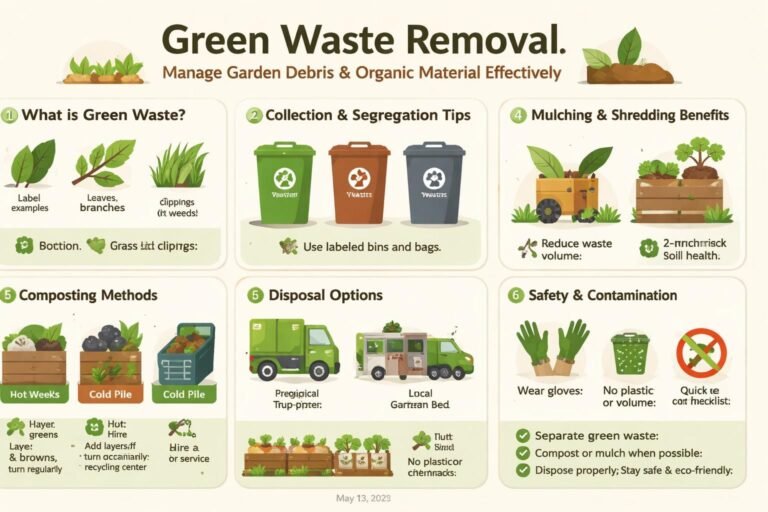
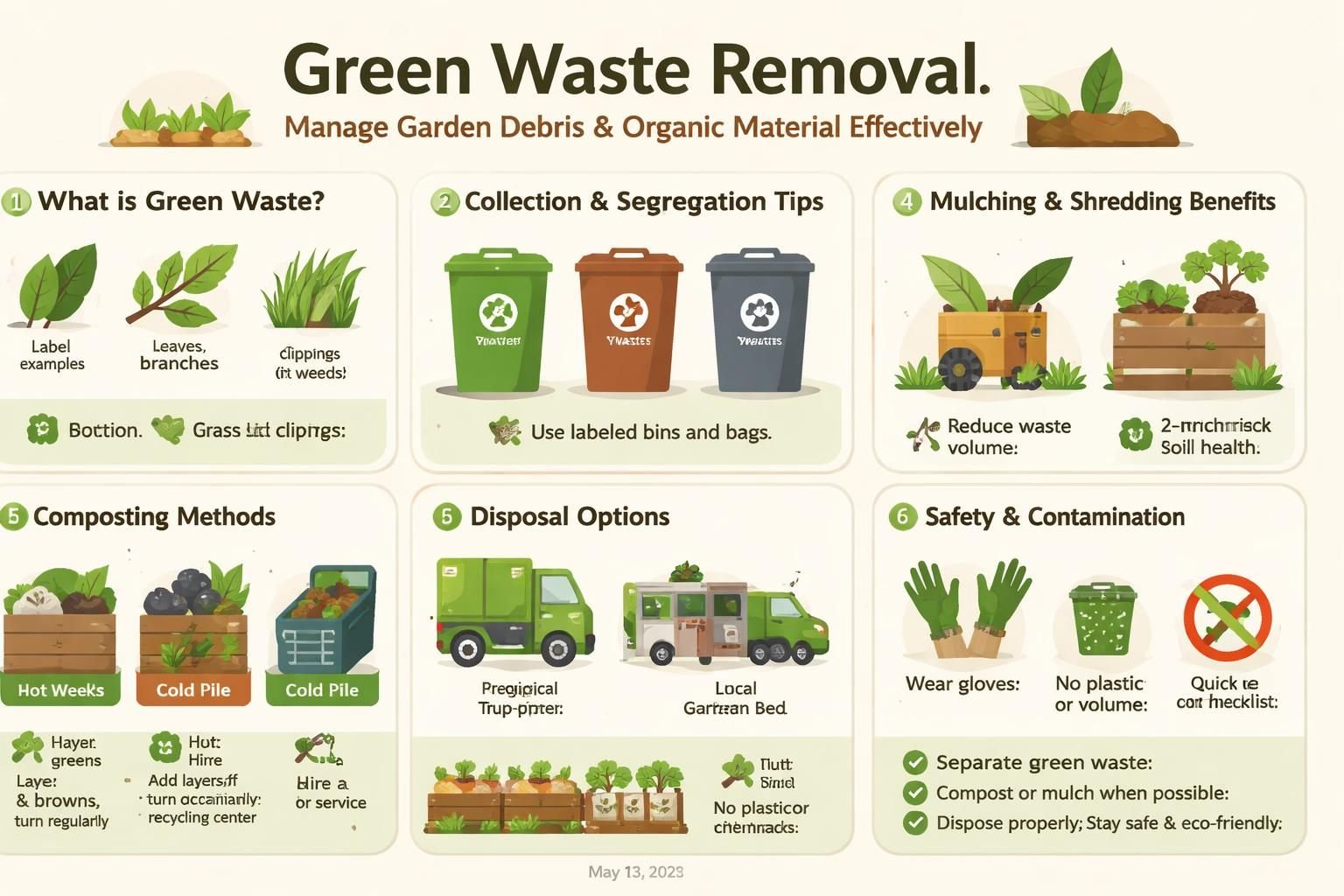
Green waste removal is the process of collecting, disposing of, and recycling organic material generated from garden maintenance and landscaping activities. The most efficient methods for removal include utilizing local council collection services via a dedicated green waste bin, hiring professional garden waste removalists, or converting garden debris into mulch and compost at home. By managing green waste responsibly, homeowners can ensure their backyard clean-up contributes to environmental sustainability rather than landfill growth.
Understanding Green Waste and Organic Material
Green waste, also known as biological waste, consists of any garden refuse that is biodegradable. Unlike general household trash, this material can be processed back into the earth, providing essential nutrients for soil health.
Common Types of Garden Debris
To ensure your waste management strategy is effective, it is important to identify what qualifies as green waste. Common items include:
- Grass clippings from regular lawn mowing.
- Tree trimming and pruning remains.
- Fallen leaves and small branches.
- Weeds and old flower beds.
- Hedge clippings and shrubbery.
It is important to note that green waste should not be mixed with treated timber, plastic, or soil, as these materials can contaminate the recycling process.
Top Methods for Green Waste Removal
Depending on the scale of your landscaping project or backyard clean-up, you may choose one or a combination of the following methods.
Utilizing Your Green Waste Bin and Council Collection
Many local municipalities provide a specialized green waste bin to residents. These bins are collected on a regular schedule as part of standard waste management services. This is the most cost-effective way to handle routine garden maintenance. Council collection programs usually transport this material to industrial composting facilities where it is turned into high-quality soil conditioners.
Professional Garden Maintenance and Landscaping Services
If you are undertaking a massive overhaul or professional tree trimming, the volume of waste may exceed what a standard bin can hold. Professional green waste removal services offer skip bins or truck-loading services. These professionals are equipped to handle heavy logs, large branches, and significant amounts of garden debris, ensuring it is transported to a dedicated recycling center.
On-Site Recycling: Mulch and Compost
For the eco-conscious gardener, the best way to handle organic material is to keep it on the property.
- Mulch: By using a woodchipper, branches and tree trimmings can be turned into mulch. This helps retain soil moisture and suppress weeds in your garden beds.
- Compost: Grass clippings and soft green matter can be added to a compost heap. Over time, this breaks down into nutrient-rich organic fertilizer, reducing the need for chemical alternatives.
Why Responsible Green Waste Management Matters
When garden waste is sent to a landfill, it breaks down anaerobically (without oxygen), producing methane—a potent greenhouse gas. However, when green waste is recycled through proper channels, it is converted into products that benefit the environment.
Recycling garden debris helps:
- Reduce landfill pressure.
- Lower carbon footprints.
- Restore soil health through organic compost.
- Support local circular economies.
Preparation Tips for a Backyard Clean-up
To make your green waste removal as smooth as possible, follow these preparation steps:
- Separate Your Waste: Keep organic material away from hard waste like rocks, bricks, or plastic pots.
- Breakdown Large Items: Cut long branches or tree trimming remains into smaller segments to maximize space in your green waste bin.
- Dry Out Grass Clippings: If you have a large volume of grass clippings, let them dry slightly before bagging or binning them to prevent heavy, compacted moisture buildup.
- Check Local Guidelines: Always verify with your council what is permitted in your specific green waste bin to avoid non-collection penalties.
Frequently Asked Questions
What happens to green waste after it is collected?
Most green waste collected by councils or private contractors is taken to a large-scale composting facility. There, it is shredded, piled into windrows, and monitored as it breaks down into nutrient-dense compost and mulch, which is then sold back to the agricultural and landscaping industries.
Can I put soil or dirt in my green waste bin?
Generally, no. Most waste management services consider soil, dirt, and sod as “hard waste” or “clean fill.” These materials are too heavy for standard green waste trucks and can interfere with the composting process.
Is tree trimming considered green waste?
Yes, tree trimmings, including leaves, small branches, and twigs, are considered green waste. However, very large stumps or trunks may require specialized removal services as they cannot be processed by standard chippers.
How often should I perform a backyard clean-up?
Regular garden maintenance is recommended every 4 to 6 weeks. Frequent cleaning prevents the accumulation of large amounts of garden debris, making it easier to manage via your standard green waste bin rather than requiring a professional skip.
Can I put food scraps in my green waste bin?
This depends on your local council. Many regions are transitioning to FOGO (Food Organics and Garden Organics) bins, which allow for fruit and vegetable scraps to be mixed with garden waste. Check your local government website for specific rules.
What is the difference between mulch and compost?
Mulch is a layer of material (like wood chips or bark) applied to the surface of the soil to protect it. Compost is decomposed organic matter that is mixed into the soil to provide nutrients. Both can be created from your garden’s green waste.
Final Words
Effective green waste removal is a cornerstone of responsible homeownership and sustainable gardening. Whether you are using a council-provided green waste bin for weekly grass clippings or hiring a team for an intensive landscaping project, ensuring your organic material is recycled helps keep your garden healthy and the environment protected. Plan your next backyard clean-up with recycling in mind to turn your garden debris into a valuable resource.