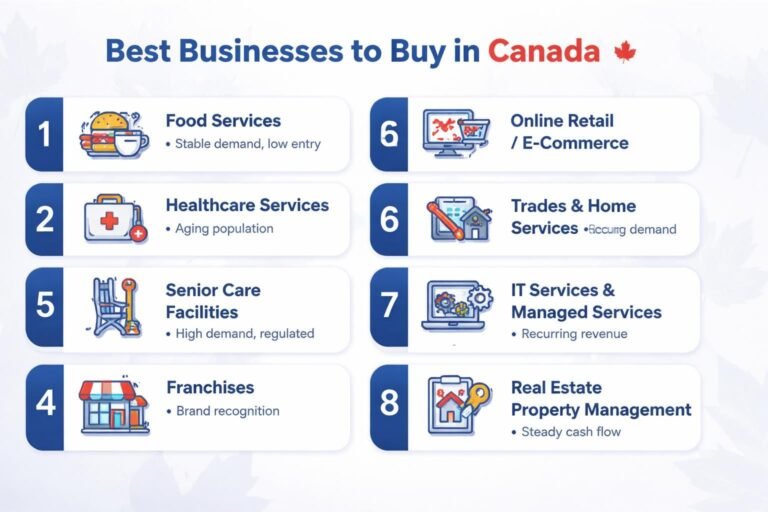
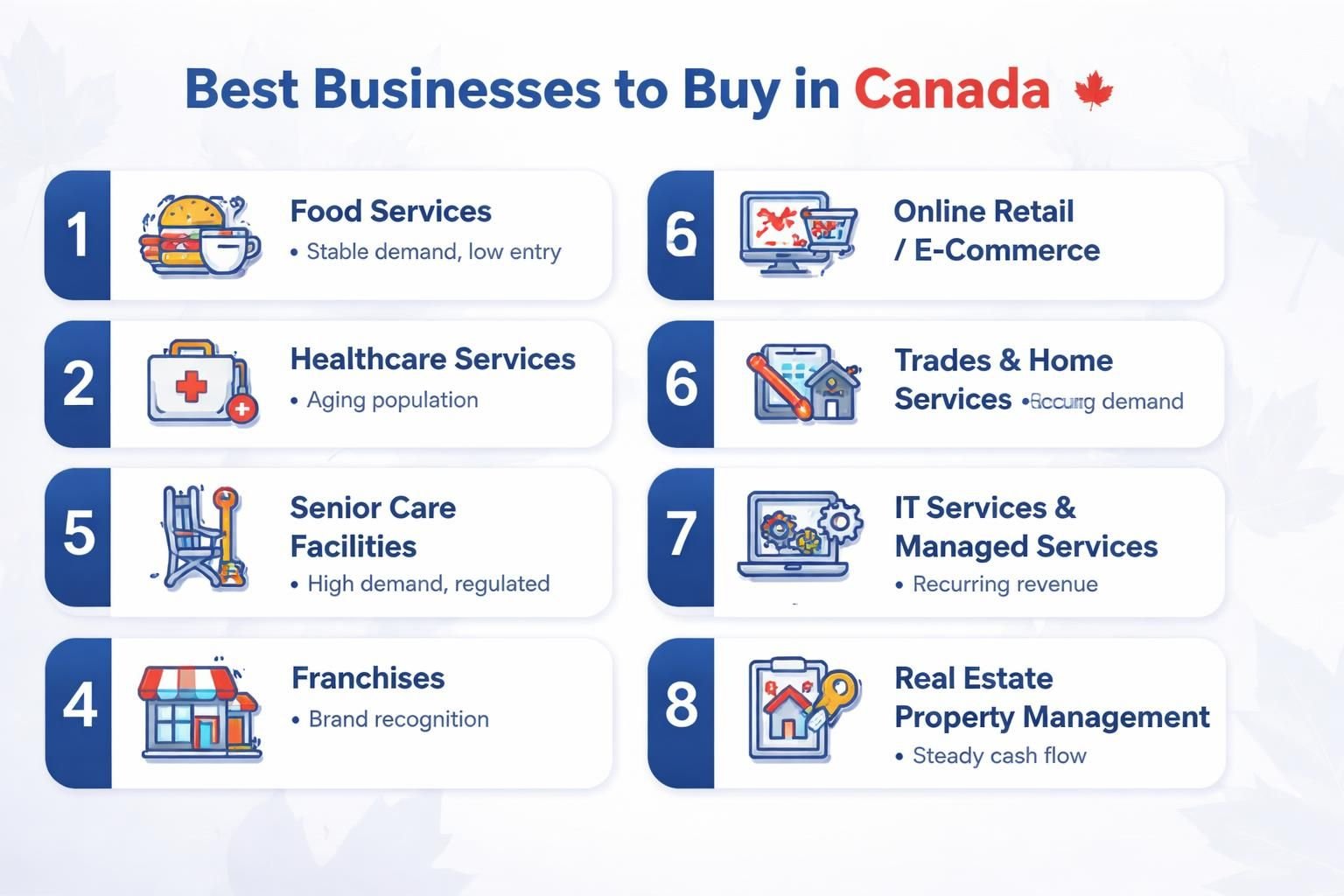
The best business to buy in Canada in 2026 is one that aligns with the nation’s aging demographic, increasing digital transformation, and aggressive climate goals. Specifically, specialized senior care services, residential property management, and green energy maintenance are projected to be the most profitable sectors. With thousands of baby boomer entrepreneurs reaching retirement age—a phenomenon known as the ‘Silver Tsunami’—2026 presents a unique window to acquire established businesses with stable cash flows and proven operational histories.
Key Drivers for the Canadian Business Market in 2026
To understand where the growth lies, investors must look at the structural changes occurring in the Canadian economy. By 2026, several factors will converge to create a prime environment for business acquisitions.
The Silver Tsunami and Succession Planning
A significant portion of Canada’s small-to-medium enterprises (SMEs) are owned by individuals over 55. As these owners seek retirement, many profitable businesses in manufacturing, trades, and professional services will hit the market. Buying an existing business with a loyal customer base and trained staff is often lower risk than starting from scratch.
Immigration and Population Growth
Canada continues to lead the G7 in population growth, primarily driven by immigration. This creates sustained demand for housing, education, and essential services in urban hubs like the Greater Toronto Area (GTA), Vancouver, and Calgary.
Top 5 Industries to Buy in Canada for 2026
1. Specialized Senior Home Care
Canada’s elderly population is growing faster than any other age group. Businesses that provide non-medical home care, specialized nutrition, and mobile health services are in high demand. These businesses are highly scalable and offer recurring revenue models that are resistant to economic downturns.
2. Green Tech and Energy Retrofitting
With federal and provincial mandates pushing for net-zero emissions, businesses that specialize in energy audits, heat pump installation, and solar maintenance are set to thrive. Acquiring a local HVAC or electrical firm and pivoting it toward ‘green’ solutions is a high-growth strategy for 2026.
3. Professional Property Management
As the Canadian real estate market evolves and more people choose or are forced to rent, the demand for professional property management is skyrocketing. This industry benefits from long-term contracts and low overhead if managed with modern automation tools.
4. Digital Logistics and Last-Mile Delivery
E-commerce is no longer a trend; it is the standard. However, the complexity of ‘the last mile’ remains a challenge in Canada’s vast geography. Buying a localized courier or logistics business that utilizes smart routing technology can provide a significant competitive edge.
5. Cybersecurity and IT Managed Services (MSP)
As SMEs across Canada digitize, they become targets for cyber threats. Most small businesses do not have the budget for an in-house IT team, making third-party Managed Service Providers essential. A business with a strong portfolio of recurring service contracts in this sector is a goldmine.
How to Evaluate a Canadian Business for Sale
Before signing a Letter of Intent (LOI), you must perform rigorous due diligence to ensure the business is viable in the 2026 landscape.
Financial Due Diligence
Review at least three to five years of financial statements. Look for ‘Quality of Earnings’—is the profit coming from core operations or one-time windfalls? In 2026, pay close attention to debt-to-equity ratios in a higher-interest-rate environment.
Regional Economic Health
Canada is not a monolithic market. A business in Alberta’s energy sector faces different risks than a tech firm in Waterloo or a tourism-based business in the Maritimes. Ensure the local economy supports the industry you are entering.
Operational Redundancy
Can the business survive without the current owner? If the success of the company depends entirely on the founder’s personal relationships, the value of the business decreases. Look for systems, processes, and a strong middle-management layer.
Financing Your Acquisition in 2026
Financing a business purchase in Canada typically involves a mix of sources:
- CSBFP (Canada Small Business Financing Program): Government-backed loans that can help finance the purchase of assets or leasehold improvements.
- Vendor Take-Back (VTB) Loans: This is where the seller finances part of the purchase price, showing they have skin in the game and confidence in the business’s future.
- Traditional Commercial Mortgages: Best for businesses that include significant real estate assets.
FAQ: Buying a Business in Canada
Is 2026 a good time to buy a business in Canada?
Yes, 2026 is considered an ideal time because a high volume of retiring ‘baby boomer’ owners will be looking to exit their businesses. This increased supply can lead to more favorable valuation multiples for buyers.
What is the most profitable franchise in Canada?
While fast-food franchises like Tim Hortons remain popular, the most profitable franchises heading into 2026 are in the home renovation and senior care sectors, due to lower initial capital requirements and high service demand.
Which Canadian provinces have the best business growth?
Alberta and Saskatchewan are currently attracting investors due to lower corporate taxes and lower costs of living, while Ontario and British Columbia remains the primary hubs for tech and international trade.
Can foreigners buy a business in Canada?
Yes, foreigners can buy Canadian businesses, but they must comply with the Investment Canada Act. Additionally, owning a business can sometimes be a pathway to permanent residency through various entrepreneur streams and the Start-up Visa program.
What are the most stable businesses for 2026?
Essential service businesses—such as plumbing, electrical, waste management, and specialized healthcare—are the most stable because they provide services that consumers cannot cut even during a recession.
Final Words
Investing in a Canadian business in 2026 requires a balance of financial intuition and an understanding of national trends. By focusing on industries that serve an aging population or facilitate the green energy transition, you position yourself for long-term growth. Always consult with a qualified business broker, accountant, and lawyer to navigate the complexities of the Canadian acquisition landscape.